Get a quote
 Client area

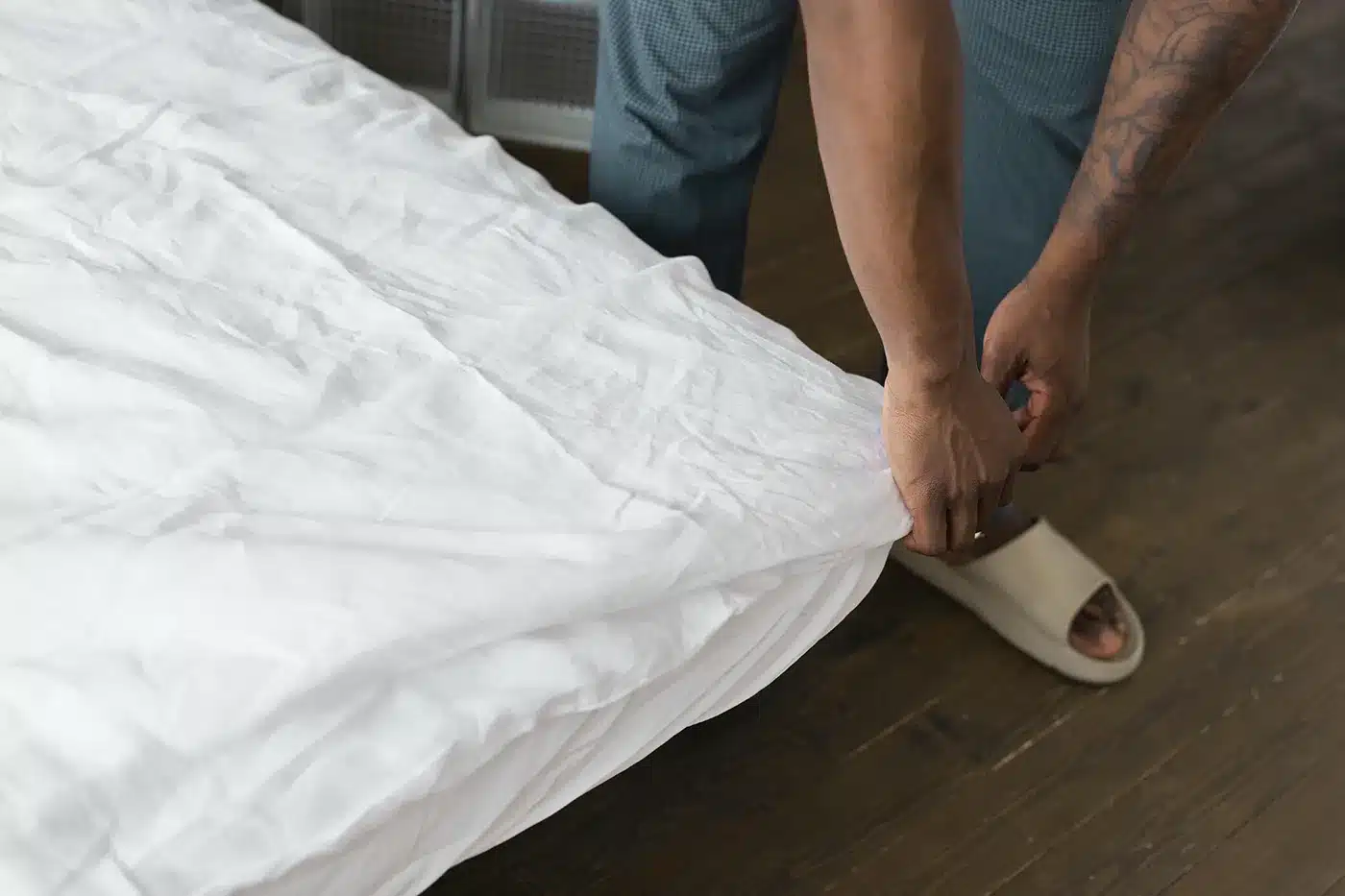
After the year 2000 bug, here comes the 2023 one: bed bugs. Gone for decades, they are back on the attack in our homes. How do you recognise these tiny insects? Are they dangerous to your health? How do you get rid of them? But above all, is there a compulsory report to make if you have bed bugs at home? Find out the answers to these questions.
Where are bed bugs found?
Bed bugs are small, round, brown insects with 6 legs, about the size of an apple pip. Their eggs are white and measure around 1 millimetre.
Most of the time they hide in bedrooms: under furniture, in the gaps between floorboards, in skirting boards, but above all in bed bases and mattresses.
They are also found in public places, such as on public transport.
Contrary to popular belief, people overrun by bed bugs are not particularly dirty. Likewise, these insects bite and itch, but they rarely cling to clothing. So bringing them home after going to a library or a bar is still fairly rare (and at adult size they are quite easy to spot).
They do, however, often slip into luggage and like to travel. As a result, the first people troubled by these insects are those who travel often.
🛬
But before you find out whether there is a compulsory report to make about the bed bugs in your home, do not forget THE essential principle: if you spot any in your accommodation, YOU MUST ACT FAST!
🚀
Find out how to go about it.
What should you do if you have bed bugs at home?
Out of shame, many people living in an infested home do not dare say anything and do nothing.
A serious mistake!
First, because bed bugs breed fast, all the more so in hot weather.
Second, without effective treatment by a specialist firm, they are likely to spread to neighbouring homes and then the whole building. That situation pushes people to move out or to find temporary accommodation while a firm treats their home (hotels, holiday lets, and so on). Which generally means extra costs.
Is a compulsory report required?
You are not obliged to report the presence of bed bugs.
But to get rid of them, you have to vacuum and machine-wash your sheets and clothes, then use a dry steam device to kill their eggs. Here is a complete guide to the good practice to adopt.
If the problem persists, however, do not try to wipe them out yourself, as they resist most insecticides.
Beware of the embellishers: some unscrupulous firms are about as specialised in bed bug treatment as your neighbour’s guinea pig.
So the ideal thing is to go to a certified professional, who will, for example, bring in dogs able to sniff them out.
🐕
Who pays for the treatment?
While you are not obliged to make a report if you have bed bugs at home, your landlord does have to bear the cost of detection and extermination. If they refuse, you can take the matter to the departmental conciliation board or to court.
In the meantime, you have to act! ✊
And disinfecting a home costs 800 euros on average. So you are better off with good insurance to avoid that expensive outlay! There is good news, though: the Etudassur “XXL” and “XXL + Vélo” policies each include bed bug home insurance. Thanks to it, if bed bugs colonise your accommodation, a pest control professional will come out as soon as possible.
Watch out, though! There is a 2-month waiting period. That means the guarantee takes effect 2 months after the start date of the policy!

FAQ
Can white vinegar kill bed bugs?
White vinegar kills adult bed bugs but not the eggs, so you need to use other methods to be sure you no longer have bed bugs at home.
How do you avoid bringing bed bugs home?
– Check that your luggage does not contain bed bugs, and do not put it on your bed, your armchairs or nearby.
– Vacuum the inside of your suitcases.
– Tumble-dry clothes or fabrics that cannot be machine-washed.
– Wash clothes and fabric items in hot water (ideally at 60°).