Get a quote
 Client area


A damaged phone, a cycling accident, an object broken at someone’s home… An everyday accident can sometimes cause significant damage.
That is where civil liability can come into play.
But what exactly is it for? Is it compulsory when you are a student? Is it included in home insurance? And might you still be covered by your parents’ policy?
Prefer video? Here are the essentials in under 2 minutes.
What is student civil liability?
Civil liability is the obligation to make good the damage you cause to another person where you are held liable.
In everyday life, civil liability cover can allow your insurer to pay the financial consequences of certain damage caused to a third party, within the limits and conditions set out in your policy.
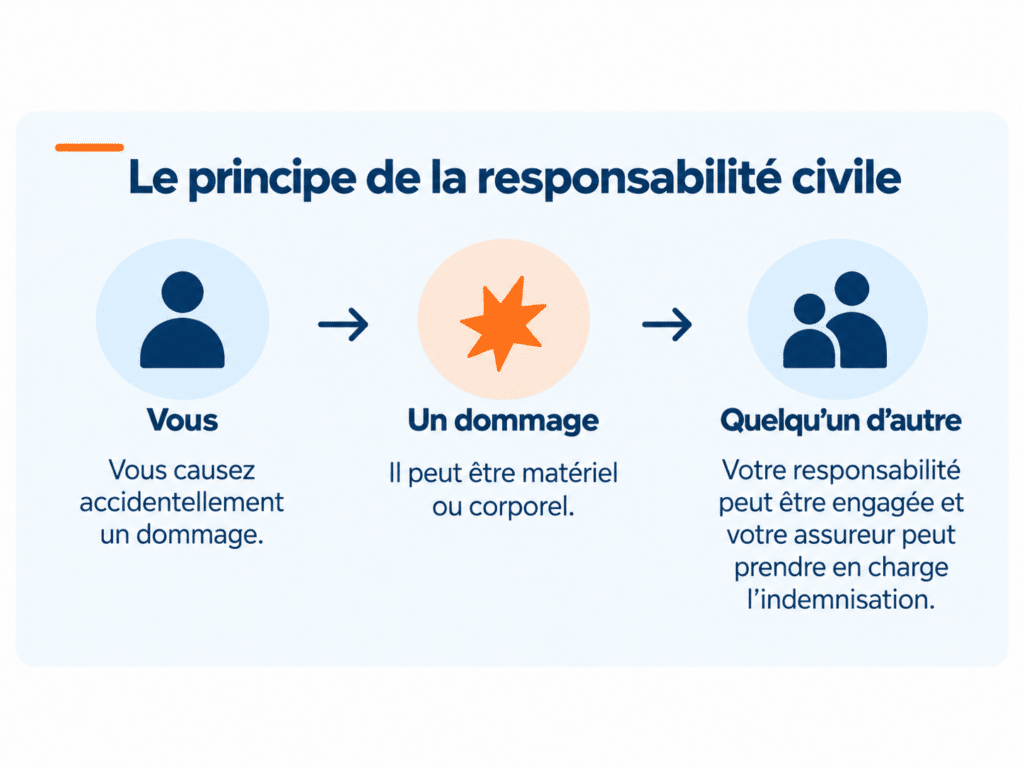
The principle can be summed up very simply:
You → cause damage → to someone else.
The damage may be material or physical.
For example, if you accidentally damage an object belonging to another person, or if you injure someone while cycling, you may be held liable.
In which situations can student civil liability step in?
A few examples make it much easier to understand how it works.
You damage a stranger's phone
You accidentally drop the phone of someone you do not know and the screen breaks.
If you are held liable and the circumstances fall within the cover set out in your policy, your civil liability may step in to compensate the injured party.
That does not mean a broken phone is automatically compensated. The circumstances of the damage, the cover, the exclusions and any excesses must always be checked.
To go further: find out how civil liability works for a broken phone.
You accidentally injure someone while cycling
You are riding your bike and accidentally hit a pedestrian or another cyclist.
Depending on the circumstances, there may be physical or material damage for which you are liable.
Private life civil liability can then step in, depending on the cover set out in your policy.
Be careful, though: using a motor vehicle comes under different insurance rules.
You cause damage at someone's home
You are at someone else’s home and accidentally drop or damage an object belonging to them.
Your civil liability may step in if you are held liable and if the damage falls within the scope of the cover in your policy.
Does civil liability cover your own belongings?
No. That is one of the main confusions to avoid.
If you drop your own computer and break its screen, your private life civil liability is not intended to compensate you, since you have caused no damage to a third party.
Conversely, if you accidentally damage a computer belonging to another person, your civil liability can potentially step in, depending on the circumstances and the terms of your policy.
So the rule to remember is simple:
Civil liability = think first of the damage caused to others.
Home insurance and civil liability: what is the difference?
Home insurance and private life civil liability are linked, but they do not mean exactly the same thing.
Home insurance covers various risks relating to the property, depending on the cover taken out: fire, water damage, rental risks, damage to property, and so on.
Private life civil liability, for its part, concerns certain damage you may cause to other people in your everyday life.
A student home insurance policy can also include private life civil liability cover.
What is the difference between private life civil liability and rental risks?
This is a particularly important distinction when you become a tenant.
Private life civil liability mainly concerns certain damage caused to other people in your everyday life.
Rental liability, for its part, concerns certain damage caused to the property you rent.
Water damage or a fire starting in your flat can also cause damage to the property or to the neighbours.
So the cover involved is not necessarily the same.
To understand this particular case, see also our explanation of neighbours’ and third parties’ recourse cover.
Does your parents' insurance still cover you when you are a student?
It is possible, but it is not automatic.
Depending on the policy your parents have taken out, a child who has become a student can sometimes continue to benefit from their civil liability cover.
Several things can come into play:
- your age;
- your student status;
- where you live;
- the people considered to be insured by the policy;
- the cover and exclusions provided for.
So it is better never to assume that you are still covered.
Contact the insurer concerned and ask them to confirm your cover. If necessary, also ask for a civil liability certificate in your own name.
Is student civil liability compulsory?
Private life civil liability has to be distinguished from the compulsory insurance for the property.
For a student tenant, insurance covering rental risks as a minimum is generally necessary.
Private life civil liability is a separate cover, even though it can be included in the same home insurance policy.
What is more, a civil liability certificate may be requested in certain situations of student life: a school, a university, a work placement or certain activities.
So the important thing is to check precisely which cover you are being asked for.
Moving in soon? Discover our student home insurance too.
How do you get a student civil liability certificate?
The civil liability certificate is a document evidencing that you have cover.
Depending on your situation, this civil liability may be attached to your home insurance or to another policy that covers you.
When you get your certificate, check in particular:
- your identity;
- the period of validity;
- the nature of the cover;
- and possibly the context in which the cover applies.
If you do not know whether you already have civil liability cover, simply ask your insurer to confirm before taking out new cover.
What should you check in your civil liability policy?
Not all civil liability cover is necessarily the same.
Before relying on your policy, check in particular:
- the people insured;
- the damage covered;
- the activities covered;
- the exclusions;
- the compensation limits;
- any excesses;
- the geographical extent of the cover.
So it is important to consult the terms of the policy that matches your situation.
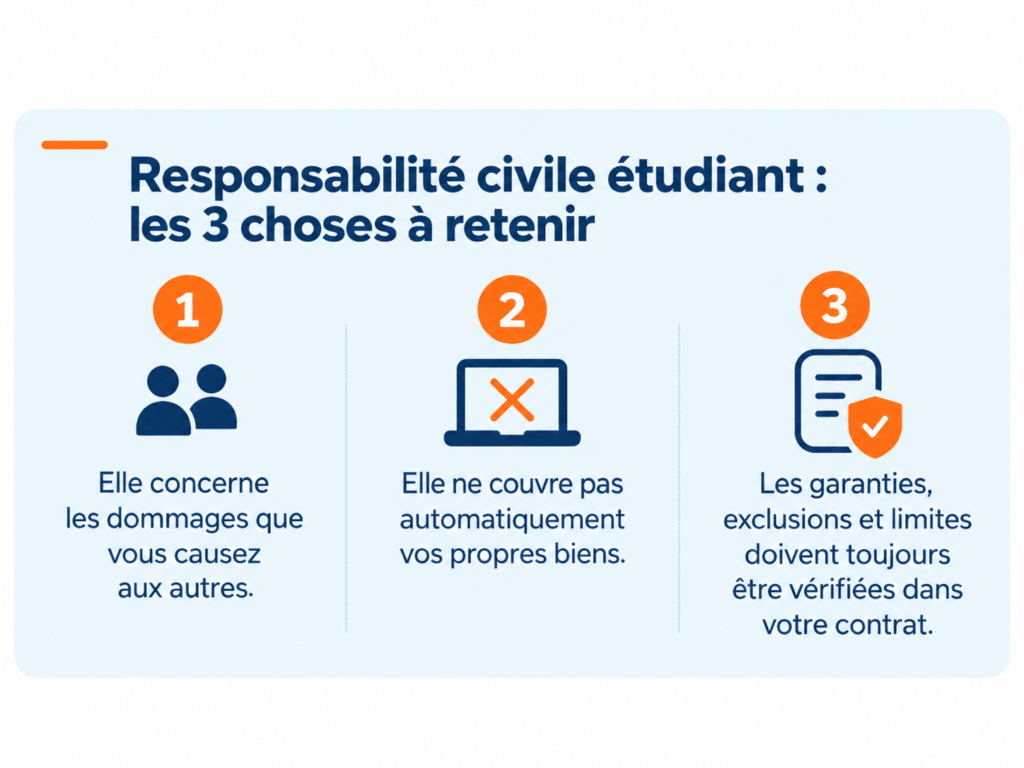
Student civil liability: the 3 things to remember
1. Civil liability mainly concerns the damage you cause to others.
2. It does not automatically cover your own belongings.
3. The cover, exclusions and limits must always be checked in your policy.
Looking for student home insurance?
Are you looking for insurance suited to your student accommodation and want to know what civil liability cover is on offer?
Discover the Étudassur solutions and choose the option that suits your situation.
Frequently asked questions about student civil liability
-
1. La responsabilité civile couvre-t-elle un téléphone cassé ?
Elle peut éventuellement intervenir lorsque vous endommagez accidentellement le téléphone appartenant à une autre personne, si votre responsabilité est engagée et si les circonstances sont couvertes par votre contrat.
-
2. Puis-je utiliser ma responsabilité civile si je casse mon propre ordinateur ?
Non. La responsabilité civile vie privée n’a normalement pas vocation à couvrir les dommages que vous causez à vos propres biens.
-
3. Suis-je encore couvert par la responsabilité civile de mes parents ?
C’est possible, mais cela dépend de leur contrat et de votre situation. Vérifiez directement auprès de leur assureur et demandez une attestation à votre nom si nécessaire.
-
4. La responsabilité civile est-elle incluse dans l’assurance habitation ?
Elle peut l’être, mais cela dépend du contrat et de la formule souscrite. Vérifiez toujours les garanties et exclusions applicables.
-
5. Où trouver mon attestation de responsabilité civile ?
Elle peut généralement être obtenue auprès de l’assureur qui couvre votre responsabilité civile, souvent depuis votre espace client ou sur demande.